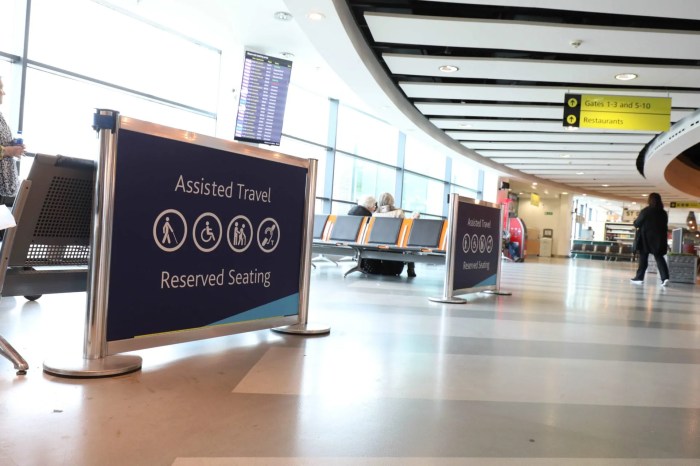
Best airports for accessible travel are more than just transportation hubs; they’re gateways to global exploration for individuals with disabilities. This exploration delves into the features, services, and policies that define truly accessible air travel, examining top-rated airports worldwide and offering practical advice for planning seamless journeys. We’ll uncover innovative solutions, discuss airline policies, and provide tips for finding affordable and accessible travel options, ensuring everyone can experience the joy of flight.
From navigating airport terminals with ease to understanding airline accessibility policies, this guide aims to empower travelers with disabilities to plan confident and comfortable journeys. We’ll cover a range of topics, including wheelchair assistance, sensory support, communication services, and strategies for securing the best deals on accessible flights and accommodations. Our goal is to highlight best practices and advocate for a more inclusive travel experience for all.
Defining Accessible Travel for Airports
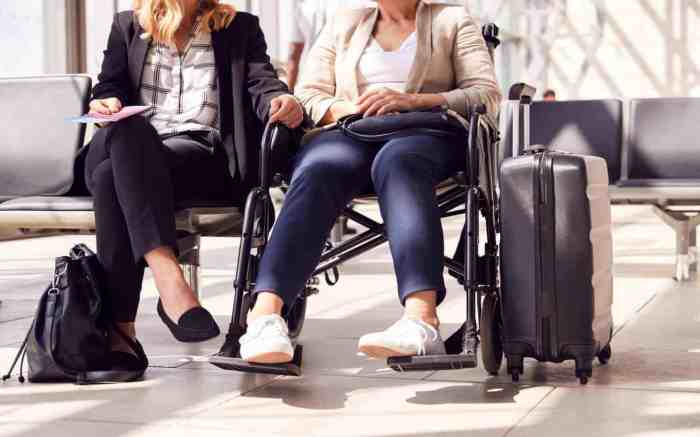
Accessible travel at airports goes beyond simply providing ramps and elevators. It encompasses a holistic approach ensuring that individuals with a wide range of disabilities can navigate the airport environment safely, efficiently, and with dignity. This includes not only physical accessibility but also considerations for sensory needs and communication barriers.Airport accessibility is crucial for ensuring equal opportunities for all travelers.
It’s about creating an inclusive environment where individuals with disabilities can experience air travel without facing unnecessary challenges or discrimination. This requires a multi-faceted approach addressing the specific needs of various disability groups and adhering to established international standards.
Accessibility Features for Wheelchair Users
Wheelchair users require a comprehensive range of accessible features to navigate airports smoothly. This includes wide doorways and corridors, accessible restrooms with adequate space for maneuvering wheelchairs, designated parking spaces close to terminal entrances, and readily available wheelchair assistance services throughout the airport. Ramps with appropriate gradients and tactile paving for guidance are also essential. Elevators and escalators with sufficient space for wheelchairs and accompanying individuals are necessary, along with clearly marked accessible routes on signage.
Furthermore, accessible boarding gates with level boarding bridges are crucial for eliminating the need for potentially difficult and time-consuming transfers. The provision of accessible baggage claim carousels and sufficient space for wheelchair users to wait comfortably is also essential.
Accessibility Features for Visually Impaired Travelers
Airports should incorporate features that aid visually impaired travelers in navigating the airport safely and independently. Tactile paving guides visually impaired individuals along pathways, providing clear direction to key areas like check-in counters, security checkpoints, and gates. Clearly marked and audible signage, including braille and large-print options, helps travelers locate important information. Audio announcements should be clear, concise, and frequent, providing updates on gate changes, delays, and other relevant information.
Furthermore, assistance from trained personnel, readily available at information desks and throughout the airport, is essential to ensure a safe and comfortable travel experience for visually impaired individuals. The use of consistent and logical wayfinding systems is crucial for ease of navigation.
Accessibility Features for Hearing Impaired Travelers
For hearing-impaired travelers, clear visual communication is paramount. This includes the use of visual displays showing flight information, gate changes, and announcements. The availability of text telephones (TTYs) and sign language interpreters at information desks and throughout the airport is essential for effective communication. Furthermore, visual alert systems, such as flashing lights for announcements, should be strategically placed to alert individuals to important information.
Staff should be trained in basic sign language or equipped with assistive communication devices to assist hearing-impaired travelers. Closed captioning on in-terminal screens is also a critical element of accessible design.
International Standards and Regulations Related to Airport Accessibility
International standards and regulations governing airport accessibility vary, but several key conventions and guidelines exist. The United Nations Convention on the Rights of Persons with Disabilities (CRPD) provides a framework for ensuring accessibility in all areas of life, including transportation. The International Civil Aviation Organization (ICAO) publishes standards and recommended practices (SARPs) related to airport design and operation, incorporating accessibility considerations.
Many countries have their own national regulations and standards that build upon these international frameworks, often incorporating more specific requirements based on local needs and contexts. These regulations commonly address aspects such as accessible restroom design, signage requirements, provision of assistance services, and the design of passenger boarding bridges. Adherence to these standards and regulations is crucial for ensuring that airports provide a truly accessible environment for all travelers.
Hotel Reviews and Tips: Best Airports For Accessible Travel
Choosing accessible hotels is crucial for ensuring a smooth and comfortable travel experience. This section provides reviews of hotels known for their accessibility features, along with tips to help you select suitable accommodations and communicate your needs effectively. Remember that accessibility standards can vary, so always verify details directly with the hotel before booking.
Hotel Accessibility Feature Reviews
Finding a hotel that truly caters to accessibility needs requires careful research. Below is a table summarizing reviews of hotels that have received positive feedback regarding their accessibility features. Please note that this is not an exhaustive list, and individual experiences may vary.
| Hotel Name | Location | Accessibility Features | User Feedback |
|---|---|---|---|
| Hyatt Regency Chicago | Chicago, Illinois, USA | Wheelchair-accessible rooms, ramps, elevators, adapted bathrooms, visual alert systems, accessible parking | “The staff was incredibly helpful and accommodating. The room was spacious and well-equipped. I felt safe and comfortable throughout my stay.” |
| Hilton London Heathrow Airport | London, England, UK | Accessible rooms with roll-in showers, grab bars, lowered counters, visual fire alarms, accessible transportation links | “The hotel is conveniently located near the airport, and the accessible facilities were excellent. The staff was knowledgeable and proactive in assisting with my needs.” |
| Novotel Paris Centre Tour Eiffel | Paris, France | Wheelchair-accessible rooms, ramps, elevators, adapted bathrooms, accessible restaurants and common areas | “The hotel’s location is fantastic, and the accessible features were well-maintained. The staff provided excellent service and were attentive to my needs.” |
Tips for Choosing and Communicating Accessibility Needs
Before booking, it is essential to proactively communicate your accessibility requirements. Here are some key tips:
When booking online, utilize the hotel’s website’s accessibility filter or contact them directly via phone or email to confirm the availability of specific features. Be specific about your needs – for example, mention the type of wheelchair you use or any specific assistive devices you require.
Request confirmation in writing regarding the accessibility features. This serves as documentation and can be useful if any issues arise during your stay. Upon arrival, inspect your room to ensure that all features are in working order and meet your needs. If there are any discrepancies, immediately notify the hotel staff.
Remember to be polite but firm when communicating your needs. Hotels are generally willing to assist, but clear and direct communication is key to ensuring your requirements are met. Consider bringing a list of your specific needs to help streamline the process. A pre-arrival phone call to confirm and clarify details can prevent any surprises upon check-in.
RV and Camper Travel
RV and camper travel offers a unique freedom, allowing individuals to explore at their own pace. However, for travelers with disabilities, navigating the challenges of accessible RV and camper travel requires careful planning and consideration. Many RVs and campers are not designed with accessibility in mind, presenting significant barriers to independent travel. This section will explore these challenges and highlight solutions to promote more inclusive RV and camper experiences.
Accessibility Challenges in RV and Camper Travel
The primary accessibility challenges in RV and camper travel stem from the inherent design and layout of these vehicles. Narrow doorways, high steps, and cramped spaces can be difficult for individuals using wheelchairs or other mobility aids. Bathrooms often lack adequate space for maneuvering and may not include features such as grab bars or roll-in showers. Furthermore, the lack of consistent accessibility standards across different RV and camper models makes it challenging to find suitable options.
Even seemingly minor features, like the placement of switches and controls, can significantly impact usability for individuals with limited mobility or dexterity. Storage accessibility is another key issue, with items often located in high or hard-to-reach places.
Modifying RVs and Campers for Improved Accessibility
Adapting an RV or camper for accessible travel can involve a range of modifications, depending on individual needs. These modifications can be relatively simple or quite extensive, ranging from installing ramps and grab bars to completely redesigning the interior layout. For example, widening doorways, lowering countertops, and installing a wheelchair-accessible ramp are common modifications. Replacing standard toilets with raised toilet seats or installing a roll-in shower can significantly improve bathroom accessibility.
Adding adjustable shelving and strategically placed storage solutions can enhance usability for individuals with limited reach. Consideration should also be given to the placement of electrical outlets and switches to ensure ease of access. Professional RV modification companies can assist with larger-scale projects, while simpler adaptations can often be completed independently or with the help of a handyman.
Resources and Organizations Supporting Accessible RV and Camper Travel
Several organizations and resources provide support and information for individuals seeking accessible RV and camper travel options. These resources often include information on accessible RV rentals, modification services, and travel tips. While a comprehensive, centralized directory doesn’t currently exist, searching online for “accessible RV rentals” or “adaptive RV modifications” will yield various local and national resources. Furthermore, disability advocacy groups and travel agencies specializing in accessible tourism can offer valuable guidance and support.
Many online forums and communities dedicated to RV travel also provide opportunities to connect with other travelers with disabilities and share experiences and advice. It’s recommended to start your search by contacting disability organizations in your area, as they often have established relationships with local RV modification specialists and accessible rental providers.
Unique Stays and Treehouses
Stepping outside the typical hotel experience opens up a world of adventure and unique lodging options. However, accessibility for travelers with disabilities in unconventional accommodations like treehouses, yurts, and cabins presents specific challenges that require careful consideration. This section explores these challenges and highlights solutions and examples of accessible unique stays.Accessibility in unique accommodations often hinges on careful planning and design, adapting the inherent limitations of the structure to meet the needs of diverse travelers.
While many unique lodgings are inherently less accessible than standard hotels, innovative solutions are emerging, demonstrating that memorable and comfortable stays are possible for everyone.
Accessibility Challenges in Unique Accommodations
Unique accommodations, by their very nature, often present accessibility barriers not found in traditional hotels. These challenges can range from navigating uneven terrain to accessing essential facilities. For example, treehouses often require climbing stairs or ladders, yurts may lack ramps or wide doorways, and cabins might have narrow hallways or bathrooms not designed for wheelchair users. These limitations can significantly restrict access for individuals with mobility impairments, visual impairments, or other disabilities.
Solutions for Accessible Unique Stays, Best airports for accessible travel
Fortunately, many solutions exist to mitigate these accessibility challenges. Ground-level treehouses or those accessible via ramps or lifts can eliminate the need for climbing. Yurts can be adapted with wider doorways, ramps, and accessible bathrooms. Cabins can be renovated with features like roll-in showers, grab bars, and wider doorways. Careful consideration of flooring materials to prevent tripping hazards is crucial, as is sufficient lighting for those with visual impairments.
Furthermore, providers can invest in adaptive technology such as voice-activated controls for lighting and appliances.
Examples of Accessible Unique Accommodations
While still a developing area, some providers are actively working to create accessible unique accommodations. Imagine a ground-level treehouse with a spacious, ramped entrance, wide doorways, and a bathroom designed for wheelchair users. The interior might feature adaptive technology, such as voice-activated lighting and climate control, along with tactile signage. Similarly, some yurt providers are now incorporating ramps, wider doorways, and accessible bathrooms into their designs, offering comfortable and accessible accommodations in a unique setting.
Several cabin rental companies are also beginning to offer cabins specifically designed with accessibility features in mind, including roll-in showers, grab bars, and wider spaces.
Tips for Travelers with Disabilities Seeking Unique and Accessible Travel Experiences
Thorough research is paramount. Contact the accommodation provider directly to discuss accessibility features and inquire about specific details. Request photos and detailed descriptions of the accommodation to assess its suitability for your needs. Look for certifications or endorsements from accessibility organizations. When booking, clearly communicate your accessibility requirements.
Consider bringing your own assistive devices, such as grab bars or ramps, if necessary, to ensure optimal comfort and safety. Don’t hesitate to ask questions; open communication is crucial to a successful and enjoyable trip.
Houseboat and Yacht Stays
Embarking on a houseboat or yacht vacation offers a unique and potentially liberating travel experience, but accessibility for individuals with disabilities requires careful consideration. The inherent challenges of navigating water-based environments and the often-custom-built nature of these vessels mean that accessibility features are not always standard. However, with careful planning and research, a memorable and inclusive trip is achievable.The primary accessibility challenges on houseboats and yachts often revolve around mobility, bathroom access, and the overall layout of the vessel.
Narrow walkways, steep steps, and the absence of ramps can present significant obstacles for wheelchair users or those with limited mobility. Bathrooms may lack sufficient space for maneuvering wheelchairs or appropriate grab bars for safety. Furthermore, the absence of accessible sleeping arrangements, such as wider beds or adaptable sleeping areas, can limit participation.
Accessible Houseboat and Yacht Features
Many modern houseboats and yachts are being designed with accessibility in mind, incorporating features such as wider doorways, ramps instead of stairs, and spacious bathrooms with grab bars and roll-in showers. Some even include adjustable beds and lift systems for easier transfer between spaces. These features are crucial for ensuring that individuals with disabilities can move freely and safely throughout the vessel.
Examples of Accessible Houseboats and Yachts
While a comprehensive list of accessible houseboats and yachts is not readily available due to the variability of custom builds and the lack of standardized accessibility ratings, it is increasingly common to find rental companies and private owners who are willing to adapt or build vessels with accessibility in mind. For example, some companies specializing in charter yachts now offer options with wider doorways, adapted bathrooms, and even wheelchair-accessible cabins.
Searching specifically for “accessible yacht charter” or “accessible houseboat rental” in your desired location will yield the most relevant results. Direct communication with rental providers to discuss specific accessibility needs is crucial.
Tips for Travelers with Disabilities Planning a Houseboat or Yacht Vacation
Booking well in advance is paramount to secure a suitable vessel and allow for any necessary adaptations. Thoroughly research rental companies and communicate your specific accessibility needs clearly, requesting detailed information on the vessel’s layout and features. Consider bringing personal assistive devices, such as a portable ramp or specialized toilet seat, to ensure optimal comfort and safety. Finally, thoroughly assess the location and potential environmental challenges, such as uneven docks or challenging water conditions, and ensure the chosen vessel and location are appropriate for your needs.
Ultimately, accessible travel is about more than just physical accommodations; it’s about ensuring that everyone, regardless of ability, can experience the freedom and joy of exploring the world. By understanding the key features of accessible airports, airlines’ policies, and available resources, travelers with disabilities can plan unforgettable trips with confidence. The information presented here serves as a starting point for a more inclusive and accessible future in the travel industry, encouraging continuous improvement and innovation.
Essential Questionnaire
What if I need a specific type of wheelchair assistance?
Most airports offer a range of wheelchair assistance options. Contact your airline and the airport in advance to specify your needs (e.g., electric wheelchair, specific size).
How far in advance should I request airport assistance?
It’s best to request assistance at least 48 hours before your flight, but the sooner the better to ensure availability.
What about emotional support animals?
Policies vary by airline. Contact your airline well in advance to confirm their policies and any required documentation for traveling with an emotional support animal.
Are there accessible restrooms in airports?
Yes, most major airports have accessible restrooms located throughout the terminals. Their locations are usually clearly marked on airport maps.